
If you’ve been in SEO or marketing for even a short time, you’ve probably heard the term digital PR. But what exactly is digital PR, and why are serious brands investing heavily in it?
More importantly…
Is digital PR just another buzzword for link building? Or is it something much more powerful?
Let’s break it down properly.
What Is Digital PR?
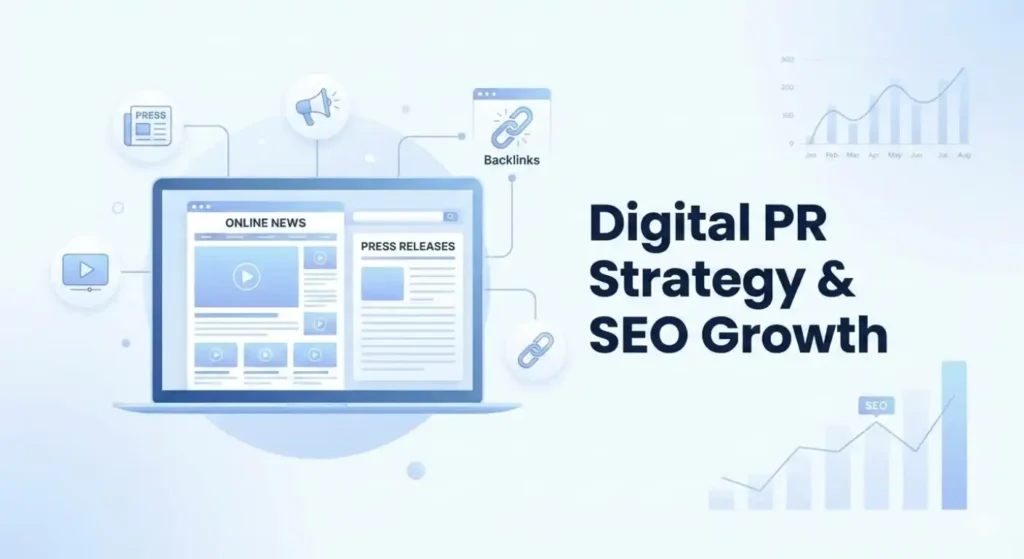
Digital PR is a strategy that helps brands earn online media coverage, high-authority backlinks, and brand mentions through journalist outreach, data campaigns, and strategic storytelling.
Unlike traditional PR (which focuses mainly on offline media like newspapers and TV), digital PR operates in the online ecosystem where links, authority, and search rankings matter.
At its core, digital PR combines:
SEO
Content marketing
Media outreach
Brand positioning
The goal isn’t just exposure.
It’s earning authoritative editorial backlinks that improve search visibility and brand credibility at the same time.
And here’s the key shift:
Today, Google doesn’t just rank websites. It ranks trusted brands. Digital PR helps build that trust.
But what does a digital PR agency actually do behind the scenes to make that happen?
Let’s go deeper.
What Does a Digital PR Agency Actually Do?
A professional digital PR agency (or digital PR company) doesn’t just send emails asking for links. It builds strategic campaigns designed to earn coverage.
Here’s what that typically includes:
1. Media & Journalist Outreach
Building relationships with journalists, editors, and niche publishers. Pitches are personalized and built around real value not generic outreach blasts.
2. Editorial Link Building
Securing contextual backlinks inside high-quality articles on authoritative websites.
3. Expert Quote Placements
Responding to journalist queries and positioning clients as industry experts.
4. Brand Mention Monitoring
Finding unlinked brand mentions and converting them into backlinks.
5. Data-Driven Campaigns
Creating research studies, statistics, or industry reports that publications want to reference.
In simple terms, a digital PR firm connects your brand to the media in a way that benefits both visibility and SEO.
But how exactly does this impact rankings?
That’s where digital PR SEO becomes powerful.
Digital PR & SEO: How It Improves Rankings
Here’s the reality:
Backlinks are still one of Google’s strongest ranking signals.
But not all backlinks are equal.
Digital PR focuses on:
Editorial links (not spam)
High-authority domains
Niche relevance
Natural link patterns
And this creates multiple SEO benefits:
Authority Signals
When trusted websites link to you, search engines interpret that as credibility.
Topical Relevance
Links from industry-specific publications strengthen your niche authority.
Brand Recognition
Repeated mentions across reputable websites build entity trust.
Organic Traffic Growth
Strong authority helps your pages rank for competitive keywords.
Think of digital PR as fuel for your SEO engine.
Now the real question is…
How do you actually build a digital PR strategy that works?
Let’s break it down step-by-step.
Digital PR Strategy: Step-by-Step Framework
If you’re wondering how to do digital PR the right way, here’s a simplified framework.
Step 1 – Research & Positioning
Analyze competitors. Identify link gaps. Understand what type of content earns coverage in your industry.
Step 2 – Campaign Ideation
Create a compelling angle:
Industry data
Trend analysis
Expert commentary
Unique insights
Ask yourself:
Would a journalist genuinely find this valuable?
Step 3 – Media List Building
Build a targeted list of journalists and websites that cover your niche.
Step 4 – Personalized Outreach
Craft tailored pitches. Avoid templates that scream “mass email.”
Step 5 – Tracking & Reporting
Monitor placements, backlinks, referral traffic, and SEO impact.
This is where many businesses struggle.
The process sounds simple but execution determines results.
So what if someone wants to try digital PR themselves?
Let’s talk about that.
How to Do Digital PR (DIY Approach)
Yes, you can do digital PR yourself especially if you’re just starting.
Here’s what you’ll need:
Media databases or journalist request platforms
Strong research-backed content
Outreach skills
Follow-up systems
Link tracking tools
Start small:
Pitch expert commentary in your niche
Create mini industry reports
Respond to journalist queries
Build relationships, not transactions
But here’s something to consider:
Digital PR is time-intensive.
Results depend heavily on relationships and pitch quality.
If your goal is scaling authority in competitive industries, partnering with a professional digital PR agency often accelerates results significantly.
Which brings us to another common confusion…
How is digital PR different from traditional PR?
Digital PR vs Traditional PR
| Traditional PR | Digital PR |
|---|---|
| Focus on offline media | Focus on online publications |
| Brand awareness primary goal | SEO + brand authority |
| Hard to measure impact | Trackable backlinks & rankings |
| Limited SEO benefit | Direct SEO impact |
Traditional PR builds reputation.
Digital PR builds reputation and search visibility.
In today’s digital-first world, the two often overlap — but digital PR is specifically optimized for online growth.
So when should you actually consider hiring a digital PR company?
When Should You Hire a Digital PR Company?
You should seriously consider professional digital PR services if:
You operate in competitive industries (legal, SaaS, healthcare, eCommerce)
Your competitors have stronger backlink profiles
You’re targeting national or U.S.-wide rankings
Organic growth has plateaued
You need high-authority links safely
Digital PR isn’t about quick wins.
It’s about building a durable SEO asset.
And once authority compounds, rankings follow.
Still wondering what real campaigns look like?
Let’s look at examples.
Real-World Digital PR Campaign Examples
Successful digital PR campaigns often include:
Industry salary reports
Data-backed trend studies
Expert prediction roundups
Controversial but research-driven insights
Interactive tools or calculators
These assets naturally attract citations from journalists.
The secret?
They provide value first. Promotion comes second.
FAQ: Common Questions About SEO Services
Digital PR is a strategy that helps businesses earn online media coverage and high-authority backlinks to improve brand visibility and search rankings.
Digital PR improves SEO by earning trusted editorial backlinks from reputable websites. These links increase domain authority, strengthen credibility, and help pages rank higher in search results.
Digital PR builds high-quality backlinks, brand mentions, and authority signals — all of which are important ranking factors in Google’s algorithm.
Most digital PR campaigns start earning placements within 4–8 weeks. SEO improvements typically become noticeable within 2–4 months.
Yes, because digital PR focuses on earning natural editorial links from authoritative websites rather than creating artificial link placements.
Yes. Even small businesses can use digital PR to build authority, gain media exposure, and compete in organic search results.
You should consider Digital PR services if you want to grow your brand’s online authority, improve search rankings, or get featured in reputable publications. It’s especially useful when your competitors have stronger backlinks, your organic growth has plateaued, or you want to scale your online visibility quickly and safely.
Final Thoughts
Digital PR isn’t just about links.
It’s about positioning your brand where trust is built inside authoritative publications your audience already respects.
If you’re serious about long-term organic growth, digital PR should be part of your SEO strategy.
Because in competitive markets, visibility alone isn’t enough.
Authority wins.
Ahmad Fraz is a seasoned SEO strategist and digital marketing expert with over 9 years of experience helping brands like Dyson, 3M, Marriott, and CureMD achieve measurable growth. Specializing in technical SEO, content strategy, and data-driven optimization, at Ahmad Fraz SEO, he empowers businesses of all sizes to improve visibility, drive qualified traffic, and achieve long-term digital success. His insights and actionable strategies are backed by years of hands-on experience and proven results.