
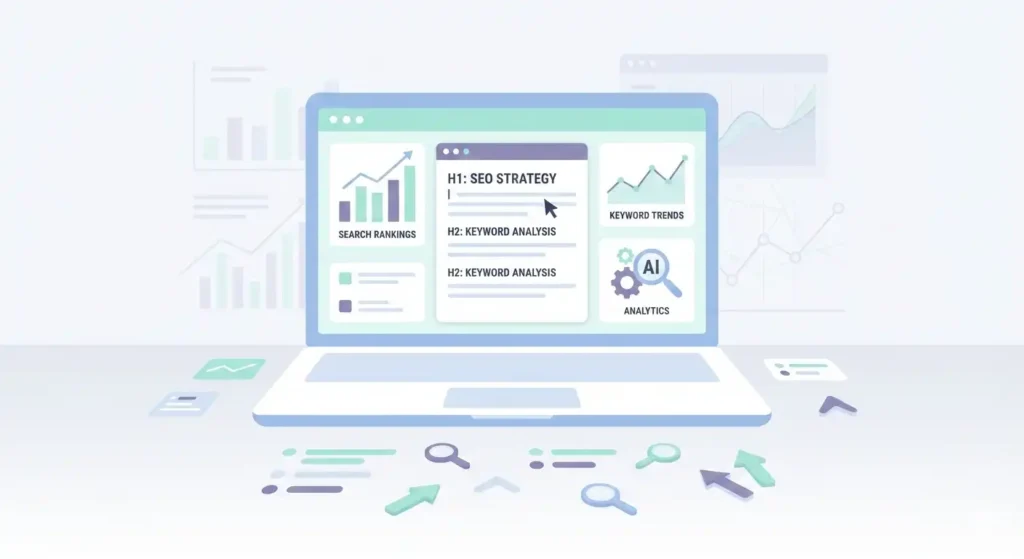
Publishing content is easy. Ranking is not.
Many websites invest heavily in SEO content writing, yet their pages remain stuck beyond page one. The reason is simple: content without proper optimization rarely performs.
SEO Content Optimization is the process of refining existing content so it ranks higher, satisfies search intent, and drives measurable business results.
But before we dive into tools and advanced strategies, let’s first understand what this actually means.
What Is SEO Content Optimization?
SEO Content Optimization is the process of improving search engine optimization content so it becomes more relevant, comprehensive, and aligned with user intent.
It includes:
Keyword refinement
Semantic expansion
On page content optimization
Content structure improvements
Internal linking enhancements
Updating outdated information
Instead of publishing endless new articles, optimization strengthens the authority of content you already have.
And once you understand what it is, the next logical question becomes:
Why does it matter so much today?
Why SEO Content Optimization Matters More Than Ever?
Search engines have evolved. Ranking today is not about inserting keywords, it’s about demonstrating depth, clarity, and completeness.
Here’s why content optimization for SEO is critical:
Google evaluates topical authority
Thin content struggles to compete
Content decay reduces rankings over time
User engagement impacts visibility
In competitive US markets, even well-written content can fail if it lacks proper web content optimization.
Modern search engines no longer rely solely on keyword matching. According to industry experts, search engines increasingly prioritise high-quality and user-relevant content, meaning content optimisation directly impacts rankings, authority, and user engagement. In fact, improved relevance and comprehensive content coverage have become key SEO signals that influence how pages perform in search results. [MarketFocus]
So now that we know why it matters, let’s break down how it actually works step by step.
How Does SEO Content Optimization Work?
Optimization is not random editing. It’s a structured process.
Step 1: Keyword & Search Intent Alignment
Every optimized page starts with understanding:
What users are searching
Why they are searching
What competitors are providing
Primary and secondary keyword clustering ensures your content covers variations like:
content optimization
content optimization for SEO
search engine optimization content
seo content
But keywords alone are not enough. Once identified, they must be strategically implemented.
Which brings us to on-page refinement.
Step 2: On Page Content Optimization
On-page optimization ensures your content structure supports rankings.
This includes:
Title tag improvements
Meta description refinement
Clear H1–H3 hierarchy
Image alt text
URL clarity
Search engine optimization content writing requires balance optimized but natural.
However, structure and keywords are only part of the equation.
To truly compete in 2026, semantic depth matters.
Step 3: Semantic & Contextual Enhancement
Modern SEO evaluates context, entities, and related concepts.
Instead of repeating “SEO content optimization” excessively, strong pages include related ideas naturally:
topical authority
search intent
content gap analysis
web content optimization
This makes your page comprehensive rather than repetitive.
But here’s the reality:
Doing all this manually can be overwhelming.
And this is exactly where AI and modern tools enter the picture.
The Rise of AI in SEO Content Optimization
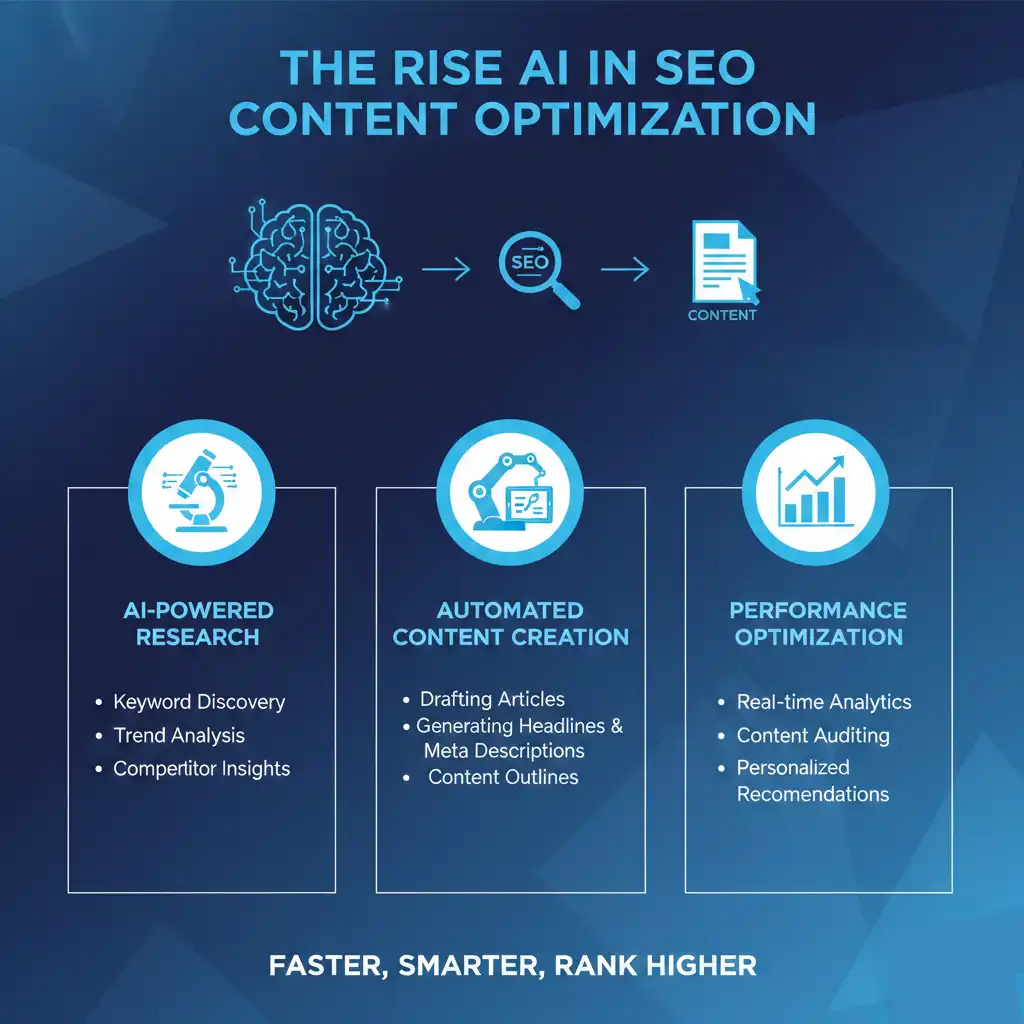
As AI continues advancing across industries, SEO is no exception.
AI content optimization tools now help marketers:
Detect semantic gaps
Analyze competitors
Suggest entity coverage
Improve contextual relevance
Instead of guessing what’s missing, AI-powered systems provide data-driven insights.
As search engines evolve, AI is playing an increasingly significant role in SEO content optimisation. Industry research shows that over 70% of marketers now use AI tools for tasks such as keyword research, semantic analysis, and content refinement dramatically improving efficiency and outcomes for competitive SEO workflows. [SEO Sandwitch]
Anyhow, some of the most effective SEO content optimization software today combines NLP, competitive analysis, and scoring systems to streamline improvements.
So let’s explore some powerful tools that can support your optimization workflow.
You may love to read also: AI SEO in 2026 & Beyond
Best Content Optimization Tools in 2026
There are many tools available, but here are some valuable options worth exploring:
1. Surfer SEO
Provides competitive content scoring and keyword coverage suggestions.
2. Clearscope
Focuses on NLP-driven semantic optimization.
3. Frase
Helps generate AI-driven briefs and identify content gaps.
4. Semrush
Strong for keyword research and competitive analysis.
5. Ahrefs
Excellent for backlink and ranking data.
These tools don’t replace expertise, they enhance it.
But even with advanced software, mistakes can still happen.
Let’s discuss common optimization errors you should avoid.
Common SEO Content Optimization Mistakes
Even experienced marketers make these mistakes:
❌ Keyword Stuffing
Repeating phrases unnaturally reduces readability.
❌ Ignoring Search Intent
If the query is informational and your page is overly sales-driven, rankings suffer.
❌ Weak Internal Linking
Internal links strengthen authority and crawlability.
❌ No Content Updates
Old information reduces trust and performance.
Avoiding these mistakes keeps your search engine optimization content aligned with best practices.
To ensure you’re doing everything correctly, here’s a practical checklist.
On-Page Content Optimization Checklist
Before publishing or updating a page, confirm:
✔ Primary keyword integrated naturally
✔ Secondary terms used logically
✔ Title and meta tags optimized
✔ Clear heading structure
✔ Internal links added
✔ Images optimized
✔ Content updated
✔ Easy-to-read formatting
Following this checklist keeps your SEO content consistently optimized.
But how do you know if your efforts are working? Share your opinion in comments.
Measuring the Success of SEO Content Optimization
Optimization without tracking is guesswork.
Monitor:
Keyword rankings
Organic traffic
CTR
Engagement metrics
Conversions
Content optimization improvements typically show measurable movement within 8–12 weeks in competitive markets.
If managing all of this feels complex, that’s when businesses consider external help.
When to Consider Content Optimization Services?
Professional content optimization services can help when:
Rankings are stagnant
Traffic is declining
Your site is large and complex
You lack time for deep analysis
Experts combine strategy, tools, and structured processes to accelerate results.
FAQs About SEO Content Optimization
SEO content optimization is the process of improving existing web content to increase rankings, relevance, and organic traffic. It involves keyword refinement, semantic expansion, on-page improvements, and search intent alignment.
SEO content writing focuses on creating new optimized content, while content optimization improves and enhances existing pages to perform better in search engines.
Most websites see measurable ranking and traffic improvements within 8–12 weeks, depending on competition and domain authority.
Content optimization tools help identify keyword gaps, semantic coverage issues, and structural weaknesses. While not mandatory, they significantly improve efficiency and accuracy.
Yes. AI content optimization tools use NLP and entity analysis to detect missing topics, improve semantic depth, and enhance contextual relevance.
In many cases, optimizing existing content delivers faster ROI because the page already has authority and indexing history.
Final Thoughts: SEO Redirects Done Right
SEO Content Optimization is not about writing more.
It’s about writing smarter and refining what already exists.
By aligning keywords, improving structure, enhancing semantic depth, leveraging AI content optimization tools, and tracking performance consistently, you transform average pages into powerful ranking assets.
Search engines reward clarity, relevance, and completeness. So, optimize accordingly.
Ahmad Fraz is a seasoned SEO strategist and digital marketing expert with over 9 years of experience helping brands like Dyson, 3M, Marriott, and CureMD achieve measurable growth. Specializing in technical SEO, content strategy, and data-driven optimization, at Ahmad Fraz SEO, he empowers businesses of all sizes to improve visibility, drive qualified traffic, and achieve long-term digital success. His insights and actionable strategies are backed by years of hands-on experience and proven results.