If you’re running a business in the US, chances are you’ve either:
- hired an SEO agency that didn’t deliver
- or you’re seriously worried about hiring the wrong one
And honestly… that fear is valid.
Because most SEO agencies don’t look fake. They don’t sound fake either.
In fact, they usually come with polished reports, impressive graphs, and “case studies” that look convincing at first glance.
So what’s actually going wrong?
Let me show you something most people miss.
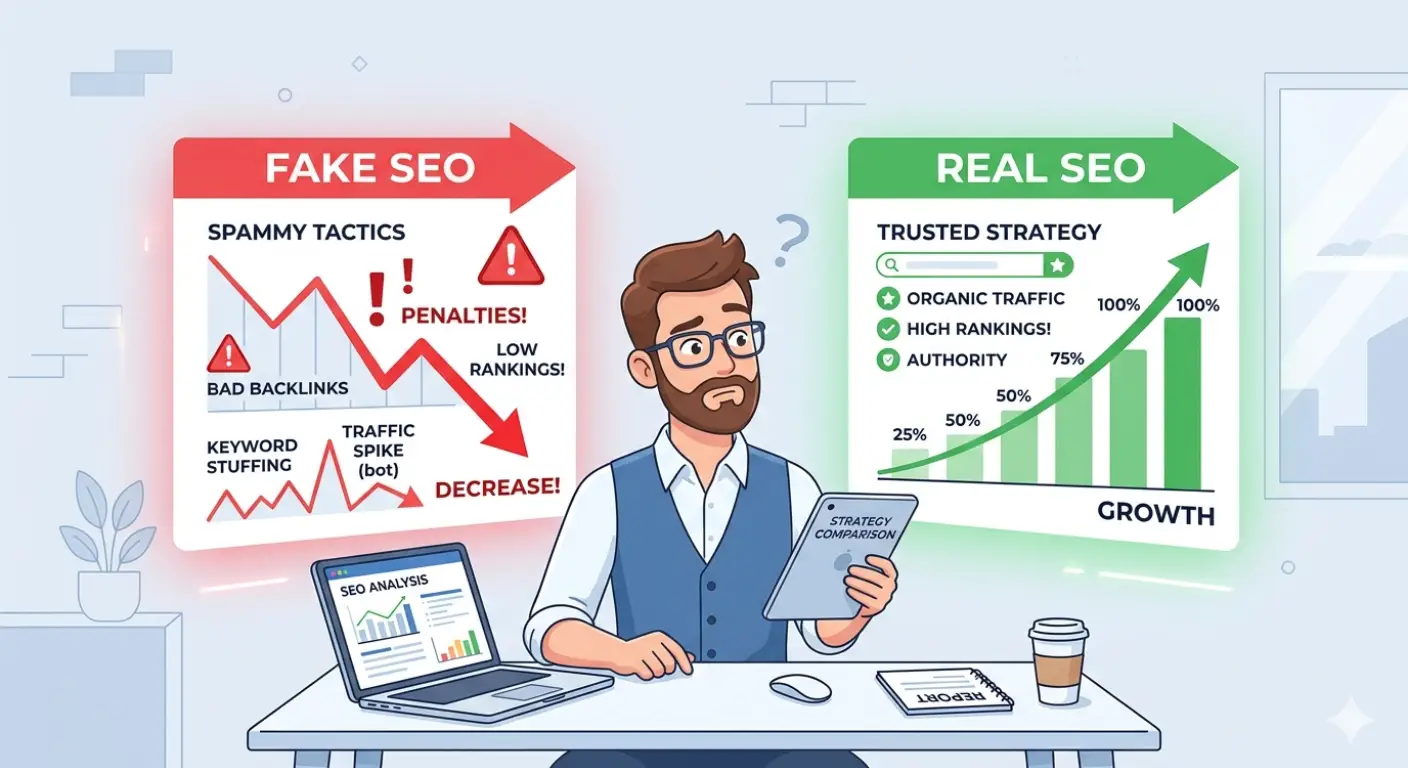
The Problem Isn’t Bad SEO… It’s Misleading SEO
Here’s the truth:
Most SEO agencies aren’t outright lying. They’re just not telling you the full story.
You’ll see things like:
- “300% traffic growth”
- “Page 1 rankings achieved”
- “Massive visibility increase”
Sounds great, right?
But what they don’t tell you is:
- Where that traffic is coming from
- Whether it converts into leads or sales
- Whether those rankings actually bring business
This is where most US businesses get stuck.
Because on paper, everything looks like it’s working.
In reality? Nothing meaningful is happening.
Why Even Smart US Businesses Fall for Fake SEO
This isn’t about being inexperienced.
Even smart, experienced business owners get caught in this.
Here’s why:
1. Reports Look Impressive (But Lack Context)
You’ll get dashboards full of numbers… but no real explanation of what they mean for your business.
2. Too Much Technical Jargon
Terms like “DA,” “backlink velocity,” “impressions growth” – they sound advanced, but they often hide the real question:
Is this making me money or not?
3. Short-Term Wins Are Highlighted
A sudden spike in traffic looks exciting… But no one talks about what happens 2 months later.
4. Paid & Organic Are Mixed Together
Some agencies quietly blend paid traffic into reports to make results look better.
And unless you’re digging deep… you won’t notice.
What Most SEO Agencies Don’t Show in Their Case Studies
This is where things get interesting.
Because what’s hidden is often more important than what’s shown.
Traffic from the Wrong Audience
You might see traffic growth… But it’s coming from countries that don’t even matter to your business.
Rankings for Low-Intent Keywords
Sure, ranking #1 sounds great. But if the keyword doesn’t convert, it’s useless.
Leads That Don’t Convert
More form submissions ≠ more revenue.
If the leads aren’t qualified, they don’t help your business grow.
Temporary Growth Spikes
Some strategies create short-term gains… Then everything drops once Google catches on.
And this part is almost never shown.
The Only 4 SEO Metrics That Actually Matter
Let’s cut through the noise.
If you’re targeting the US market, these are the only metrics that truly matter:
1. Revenue from Organic Traffic
Not traffic. Not clicks. Actual revenue generated through SEO.
2. Qualified Leads
Are you getting inquiries from people who can actually become customers?
3. Conversion Rate
Is your organic traffic turning into business?
4. Keyword Intent (Not Just Rankings)
Are you ranking for keywords that show buying intent?
Because ranking for the wrong keywords is just wasted effort.
Important Point to Consider: SEO Is a Funnel, Not a Shortcut to Leads
Here’s something most people misunderstand about SEO, especially when the goal is leads.
SEO is not an instant lead machine. It works like a step-by-step system.
- First, your money pages get indexed by Google.
- Then they start building visibility and rankings for relevant keywords.
- After that, you begin to get targeted organic traffic (actual traffic).
- Once the right audience starts landing on your website, trust and engagement kick in.
- And only then does that traffic turn into conversions and real leads.
So the process is actually: Indexing → Ranking → Targeted Traffic → Conversions → Leads
The mistake many businesses make is expecting leads immediately after “SEO is done” or a project is launched.
But in reality, SEO is a flow system, not a switch.
If any step is missing especially intent or conversion optimization, you may get traffic but no leads.
That’s why understanding this funnel is critical before judging SEO performance.
A Simple 5-Minute Test to Spot Real SEO Results
Next time you see an SEO case study, run this quick test:
- Is the starting point clearly defined?
- Is there a realistic timeline?
- Are revenue or leads mentioned?
- Is the target market (like the US) clearly specified?
- Is the strategy actually explained?
If most of these answers are “NO”…
You’re not looking at real results. You’re looking at a sales document.
If you’re still in the process of choosing who to hire, this pairs well with how to choose an SEO agency that actually delivers.
What Real SEO Results Actually Look Like
Real SEO is simple to recognize. Once you know what to look for.
It shows:
- Consistent growth (not random spikes)
- Clear connection between traffic and revenue
- Rankings for high-intent keywords
- Results that align with business goals
For example, one of my recent projects focused on scaling organic revenue, not just traffic.
Within 12 months:
- Organic revenue grew from $10K to $100K/month
- High-intent keywords started ranking in top positions
- Organic became the primary revenue channel
If you want to see how these results actually look in real projects, you can explore my SEO case studies for US businesses.
SEO Has Changed - And Most Businesses Haven’t Realized It Yet
A big reason why businesses still fall for outdated SEO promises?
The game has changed.
Today, SEO is no longer about:
- stuffing keywords
- building random backlinks
- chasing traffic numbers
Instead, it’s about:
- understanding search intent
- building topical authority
- optimizing for AI-driven search (like ChatGPT, Google AI overviews, and more)
And most agencies are still playing the old game.
FAQ Section
Real SEO results always show clear context including starting point, strategy, timeline, and measurable outcomes like leads or revenue. If a case study only shows traffic growth without explaining business impact, it’s likely incomplete or misleading.
For businesses, the most important SEO metrics are organic revenue, qualified leads, conversion rate, and keyword intent. Traffic alone doesn’t matter unless it contributes to real business growth.
Many agencies focus on increasing traffic without aligning it with user intent. This leads to visitors who don’t convert into leads or customers, making the results look good on paper but ineffective in reality.
In most cases, meaningful SEO results take around 3 to 6 months, depending on competition, industry, and strategy. Sustainable growth takes time, especially in competitive US markets.
A real SEO case study should clearly define the problem, explain the strategy used, show a realistic timeline, and highlight measurable results such as traffic, rankings, leads, and revenue.
No, SEO cannot guarantee specific rankings because search algorithms constantly change. However, a data-driven strategy can significantly improve visibility, traffic, and conversions over time.
This usually happens when your website ranks for low-intent or irrelevant keywords. Without targeting the right audience or optimizing for conversions, traffic won’t turn into leads.
Common red flags include guaranteed rankings, lack of transparency, vague reporting, no clear strategy, and case studies without real data or timelines.
You can create an SEO portfolio by adding real or practice projects and clearly showing the problem, strategy, and results (traffic, rankings, or leads). Keep it simple, structured, and result-focused. I wrote a complete guide: https://ahmadfrazseo.com/how-to-create-seo-portfolio/ you can get detailed knowledge from here.
Final Thought
SEO isn’t complicated.
But it’s very easy to get misled… especially when everything looks good on the surface.
If you understand what actually matters, you won’t just avoid bad decisions…
You’ll make smarter ones that drive real growth.
If you’re unsure whether your current SEO strategy is truly driving results… or just looking good in reports, Let’s talk.
I’ll walk you through what’s working, what’s not, and what needs to change based on real data, not assumptions.