SEO Isn’t Dead - But Most Advice About It Is...
Most AI SEO content online is already outdated.
Not because AI is new… But because people are still explaining it like it’s 2022.
Search has fundamentally changed.
Today:
- Google doesn’t just rank pages
- It generates answers
- It selects sources
- It decides who gets visibility, even without clicks
If your content isn’t built for that system, it won’t just rank lower…
It will disappear.
This blog is not a theory. This is based on what I’ve seen working across real projects including multi-region brands and AI-focused businesses.
What AI SEO Really Means (Simple but Accurate)
AI SEO is not about using AI tools.
It’s about aligning your content with how AI systems:
- Understand intent
- Evaluate trust
- Extract answers
- Build summaries
Traditional SEO:
→ “How do I rank #1?”
AI SEO:
→ “How do I become the best answer?”
That’s a completely different game.
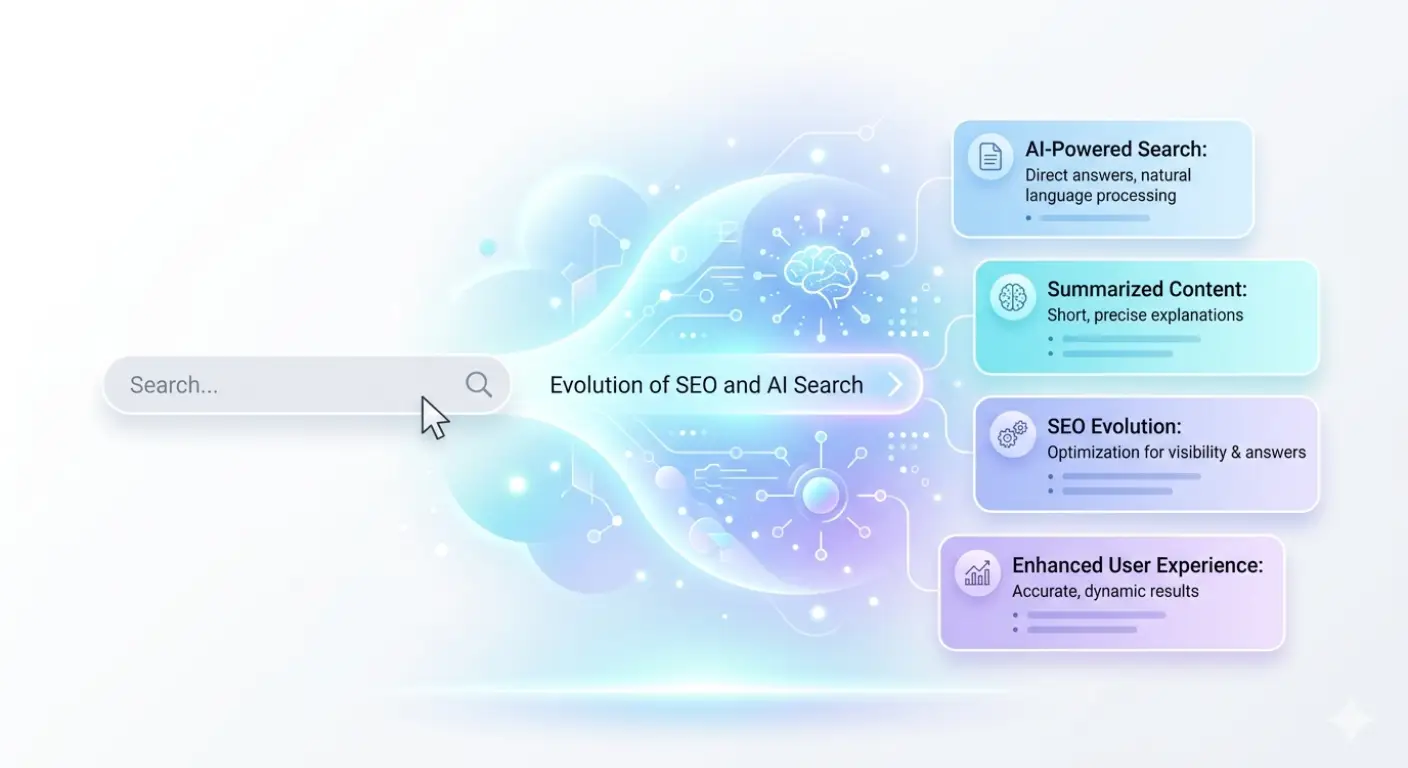
What Changed: From Rankings → Selection
We’re no longer optimizing just for rankings.
We’re optimizing for selection.
AI systems now:
- Pull data from multiple sources
- Combine insights
- Show summarized answers
Which means:
You don’t need to be #1.
You need to be worth citing.
The Biggest Shift in AI SEO: Search Behavior
Users now search like this:
(Bad) “AI SEO tools”
(Good) “How can I use AI to improve SEO in 2026?”
That changes everything.
If your content:
- Sounds robotic
- Is keyword-stuffed
- Or lacks direct answers
AI ignores it.
My AI SEO Framework (2026)
This is the exact structure I use across projects.
1. Intent Mapping
Understand why the user is searching.
Not just:
- keyword
But: - problem
- context
- expected outcome
2. Answer Structuring
AI prefers:
- direct answers
- early clarity
- structured sections
If your answer is buried, you lose.
3. Entity & Topic Coverage
AI connects ideas.
So instead of one keyword, you cover:
- related concepts
- entities
- use-cases
This builds topical authority.
Want the fuller picture, including how Google’s Knowledge Graph actually works and a real case study with the numbers? See Entity SEO: Why Google Cares About What You Mean, Not What You Type.
4. Experience Layer
This is where most content fails.
You need:
- real examples
- observations
- actual use cases
Not just rewritten internet knowledge.
5. AI Citation Optimization
Your goal: Make your content easy to extract
That means:
- short paragraphs
- clear headings
- concise answers
- no fluff
Think like: “If AI copies one section from my page, is it valuable?”
This one deserves its own deep dive, there’s real research behind exactly why structure moves citation rates even when the content itself doesn’t change. See AI Citation Optimization: How to Actually Get Quoted by ChatGPT, Perplexity, and AI Overviews
What Actually Works in AI SEO (Real Observations)
From testing and projects:
- Pages that answer within the first 100 words get picked more
- Structured content beats long essays
- Experience-based writing gets cited more
- Generic listicles are losing visibility
- Clear formatting improves extraction
This is not theory.
This is what’s happening right now.
Case Study: Multi-Region Brand (Dyson)
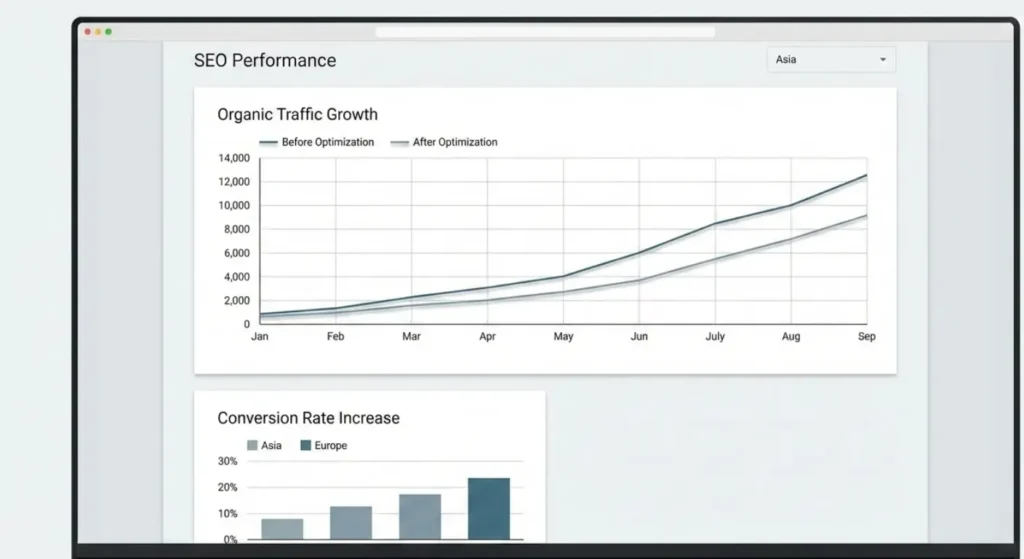
One of the most important projects I worked on involved a consumer-focused brand operating across multiple regions.
The problem wasn’t ranking.
It was relevance.
What I Found:
- Asia: users searched for performance & efficiency
- Europe: users focused on sustainability & eco-impact
What I Did:
- Mapped regional intent using AI analysis
- Created region-specific landing pages
- Adjusted messaging based on user expectations
- Structured content for AI summaries
Results (within months):
- Organic traffic increased significantly
- Conversion rates improved across regions
- Visibility inside AI-generated results improved
Key takeaway: AI didn’t replace strategy, it refined it.
Another Case Study: AI Project (ZenaTech)
In an AI-focused project, the challenge was different:
Competing in a space already filled with AI-generated content
Strategy:
- Focused on clarity over volume
- Built structured, answer-first content
- Avoided generic AI explanations
- Added human insights on top of AI-assisted drafts
Outcome:
- Better engagement signals
- Improved indexing consistency
- Higher visibility for long-tail AI queries
Lesson:AI content works only when guided by human experience
How to Use AI for SEO (Practical Workflow)
Step 1: Intent Research
Use AI to:
- find questions
- detect patterns
- understand search behavior
Focus on: Why users search not just what they type
Step 2: Content Creation (AI + Human)
Best workflow:
- AI → research + outline
- Human → experience + refinement
If content feels generic, it fails.
For the full workflow, including what Google has actually said about AI content and the one advantage no competitor running the same AI tools can copy, see Using AI for SEO Content: What Actually Works (And What Gets You Penalized).
Step 3: Optimization for AI Search
Focus on:
- internal linking
- structured formatting
- topical depth
- clarity
Because AI rewards organized thinking.
Mostly Common AI SEO Tools
Tools don’t create advantage.
Usage does.
- For research → ChatGPT / Gemini
- For structure → Surfer / Frase
- For authority → MarketMuse
- For analysis → Ahrefs / SEMrush
If everyone uses tools the same way, results become average.
Disclaimer: This is according to my experience, If someone have better tools share your thoughts in comments.
This list is a quick snapshot, the tools landscape shifts fast enough that it deserves its own page, one I actually revisit and update monthly. See AI SEO Tools in 2026: What’s Actually Worth Paying For for the full, current breakdown.
Is AI Content Safe for SEO?
Yes! But only when it’s used correctly.
AI-generated content on its own isn’t a problem. What matters is how it’s created, refined, and presented.
Search engines are not trying to detect who wrote the content. They’re evaluating how useful and trustworthy it is.
AI content works well when:
- It’s properly edited and refined
- It includes real experience, insights, or examples
- It clearly solves a specific user problem
- It’s structured in a way that’s easy to understand
Where most people go wrong is relying entirely on AI output.
Unedited AI content often:
- Sounds generic
- Repeats existing information
- Lacks depth or originality
That’s exactly the type of content search engines tend to ignore.
The real advantage comes from combining both:
- AI for speed and structure
- Human input for experience and differentiation
In other words:
AI can help you create content faster. But only human insight makes it worth ranking.
Final Thoughts
Here’s what’s clear:
- AI will control more of search
- Clicks will decrease
- Authority will matter more
- Experience will become the biggest differentiator
SEO isn’t ending. It’s filtering.
Build an AI SEO Strategy That Actually Works
Most businesses are already using AI.
Very few are using it correctly.
That’s why some websites are getting more visibility in AI search…
while others are getting ignored completely.
If you want to:
- Show up in AI Overviews
- Build real topical authority
- Create content that actually gets selected (not just published)
Then you need more than tools.
You need a clear strategy.
Explore my AI SEO services to see how I apply these strategies in real projects.
Or if you prefer a quick discussion, you can reach out and I’ll walk you through what’s working right now.
FAQ Section
AI SEO is the process of optimizing content for search engines that use artificial intelligence to understand intent, evaluate trust, and generate answers instead of just ranking pages.
To appear in AI Overviews:
- Answer questions clearly and early in your content
- Use structured headings (H2, H3)
- Write concise, direct explanations
- Add real experience and insights
AI prefers content that is easy to extract and trustworthy.
This usually happens when:
- Content is too generic
- It lacks unique value or experience
- It overlaps with existing content
To fix this, improve differentiation, add real insights, and structure content for clarity.
Yes, but only when edited and improved by humans.
Pure AI-written content often lacks originality and trust signals, which can prevent indexing or ranking.
Traditional SEO focuses on rankings and keywords.
AI SEO focuses on:
- Intent
- relevance
- authority
- and being selected as a source in AI-generated answers
Content that:
- Directly answers questions
- Is well-structured
- Includes real examples or experience
- Avoids fluff and filler
AI systems prefer clarity over length.
No.
AI can assist with research and content creation, but strategy, experience, and decision-making still require human expertise.
It can take a few days to a few weeks.
If a page is not indexed, it usually means Google doesn’t see enough value yet — improving content quality and uniqueness helps.
No.
Tools help with analysis and efficiency, but results depend on strategy, execution, and content quality.
Publishing generic AI-generated content without adding unique insights or real experience.
This type of content often gets ignored by both users and search engines.